Unix Filesystem Permissions
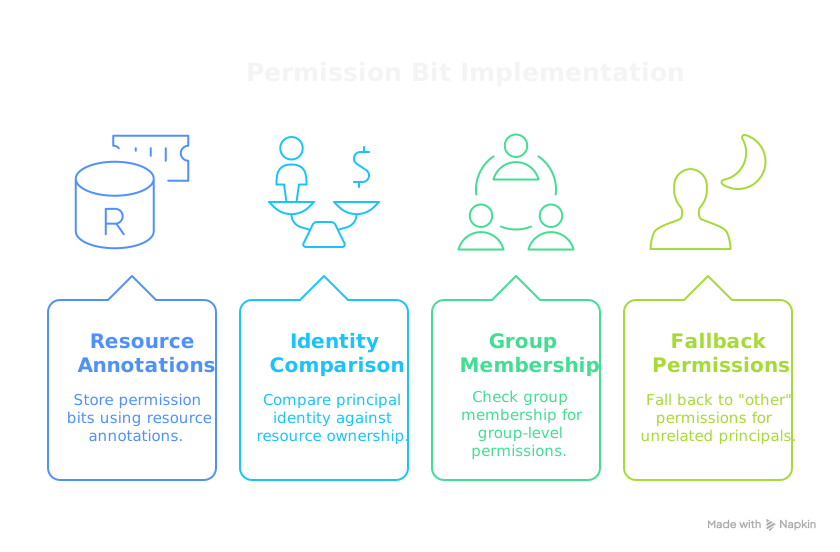
This example demonstrates how to implement classic Unix-style permission bits using MPE's annotation system. Just like Unix files have rwxrwxrwx permissions for owner, group, and other, this PolicyDomain models read/write access for three permission classes.
Overview
In Unix filesystems, every file has:
- An owner (a specific user)
- A group (a named group of users)
- Permission bits for owner, group, and other (everyone else)
We'll model this using:
-
resource.owner— The principal who owns the resource -
resource.annotations.group— The MRN of the owning group -
resource.annotations.mode— Permission bits encoded as an object -
principal.mgroups— Groups the principal belongs to
Design
Permission Model
Each resource has a mode annotation containing permission bits:
{
  "owner": { "read": true, "write": true },
  "group": { "read": true, "write": false },
  "other": { "read": true, "write": false }
}
This is equivalent to Unix mode 0644 (owner: rw, group: r, other: r).
Access Decision Flow
apiVersion: iamlite.manetu.io/v1beta1
kind: PolicyDomain
metadata:
  name: unix-filesystem
spec:
  # ============================================================
  # Policy Libraries - Reusable helper functions
  # ============================================================
  policy-libraries:
    - mrn: &lib-utils "mrn:iam:library:utils"
      name: utils
      description: "Common utility functions"
      rego: |
        package utils

        import rego.v1

        # Check if request has a valid principal (authenticated)
        has_principal if {
            input.principal != {}
            input.principal.sub != ""
        }

    - mrn: &lib-unix-perms "mrn:iam:library:unix-perms"
      name: unix-perms
      description: "Unix permission checking utilities"
      rego: |
        package unix_perms

        import rego.v1

        # Determine which permission class applies to this principal
        # Returns: "owner", "group", or "other"
        permission_class(principal, resource) := "owner" if {
            principal.sub == resource.owner
        }

        permission_class(principal, resource) := "group" if {
            principal.sub != resource.owner
            resource.annotations.group in principal.mgroups
        }

        permission_class(principal, resource) := "other" if {
            principal.sub != resource.owner
            not resource.annotations.group in principal.mgroups
        }

        # Check if the permission class has the required permission
        has_permission(mode, class, permission) if {
            mode[class][permission] == true
        }

        # Map operations to required permissions
        required_permission(operation) := "read" if {
            some suffix in {":read", ":list", ":get"}
            endswith(operation, suffix)
        }

        required_permission(operation) := "write" if {
            some suffix in {":write", ":create", ":update", ":delete"}
            endswith(operation, suffix)
        }

  # ============================================================
  # Policies
  # ============================================================
  policies:
    # Operation phase - require authentication for all file operations
    - mrn: &policy-require-auth "mrn:iam:policy:require-auth"
      name: require-auth
      description: "Require authentication for file operations"
      dependencies:
        - *lib-utils
      rego: |
        package authz

        import rego.v1
        import data.utils

        # Tri-level: negative=DENY, 0=GRANT, positive=GRANT Override
        # Default deny - only grant if authenticated
        default allow = -1

        # Grant authenticated requests
        allow = 0 if utils.has_principal

    # Identity phase - any authenticated user can attempt file operations
    # The actual permission check happens in the resource phase
    - mrn: &policy-authenticated-user "mrn:iam:policy:authenticated-user"
      name: authenticated-user
      description: "Allow any authenticated user to proceed to resource phase"
      dependencies:
        - *lib-utils
      rego: |
        package authz

        import rego.v1
        import data.utils

        default allow = false

        # Grant if authenticated
        allow if utils.has_principal

    # Resource phase - Unix permission bit checking
    - mrn: &policy-unix-permissions "mrn:iam:policy:unix-permissions"
      name: unix-permissions
      description: "Check Unix-style permission bits"
      dependencies:
        - *lib-unix-perms
      rego: |
        package authz

        import rego.v1
        import data.unix_perms

        default allow = false

        # Main permission check
        allow if {
            # Get the permission mode from the resource
            mode := input.resource.annotations.mode

            # Determine which class this principal falls into
            class := unix_perms.permission_class(input.principal, input.resource)

            # Get the required permission for this operation
            required := unix_perms.required_permission(input.operation)

            # Check if the permission is granted
            unix_perms.has_permission(mode, class, required)
        }

        # Superuser bypass - if principal has superuser role, always allow
        allow if {
            "mrn:iam:role:superuser" in input.principal.mroles
        }

  # ============================================================
  # Roles
  # ============================================================
  roles:
    # Regular user - relies on file permissions
    - mrn: &role-user "mrn:iam:role:user"
      name: user
      description: "Regular filesystem user"
      policy: *policy-authenticated-user

    # Superuser - bypasses permission checks (like root)
    - mrn: &role-superuser "mrn:iam:role:superuser"
      name: superuser
      description: "Superuser with full access (like root)"
      policy: *policy-authenticated-user

  # ============================================================
  # Groups - User groups for file permissions
  # ============================================================
  groups:
    - mrn: "mrn:iam:group:developers"
      name: developers
      description: "Development team"
      roles:
        - *role-user

    - mrn: "mrn:iam:group:admins"
      name: admins
      description: "System administrators"
      roles:
        - *role-superuser

    - mrn: "mrn:iam:group:finance"
      name: finance
      description: "Finance department"
      roles:
        - *role-user

    - mrn: "mrn:iam:group:hr"
      name: hr
      description: "Human resources"
      roles:
        - *role-user

  # ============================================================
  # Resource Groups
  # ============================================================
  resource-groups:
    - mrn: &rg-files "mrn:iam:resource-group:files"
      name: files
      description: "All filesystem resources"
      default: true
      policy: *policy-unix-permissions

  # ============================================================
  # Operations
  # ============================================================
  operations:
    - name: file-operations
      selector:
        - "file:.*"
      policy: *policy-require-auth
Test Cases
Test 1: Owner Read Access
The owner can read their own file with owner read permission:
{
  "principal": {
    "sub": "alice",
    "mroles": ["mrn:iam:role:user"],
    "mgroups": ["mrn:iam:group:developers"]
  },
  "operation": "file:document:read",
  "resource": {
    "id": "mrn:fs:home:alice:document.txt",
    "owner": "alice",
    "group": "mrn:iam:resource-group:files",
    "annotations": {
      "group": "mrn:iam:group:developers",
      "mode": {
        "owner": { "read": true, "write": true },
        "group": { "read": true, "write": false },
        "other": { "read": false, "write": false }
      }
    }
  }
}
Expected:
mpe test decision -b policydomain.yml -i input.json | jq .decision
# "GRANT"
Test 2: Owner Write Access
The owner can write to their own file:
{
  "principal": {
    "sub": "alice",
    "mroles": ["mrn:iam:role:user"],
    "mgroups": ["mrn:iam:group:developers"]
  },
  "operation": "file:document:write",
  "resource": {
    "id": "mrn:fs:home:alice:document.txt",
    "owner": "alice",
    "group": "mrn:iam:resource-group:files",
    "annotations": {
      "group": "mrn:iam:group:developers",
      "mode": {
        "owner": { "read": true, "write": true },
        "group": { "read": true, "write": false },
        "other": { "read": false, "write": false }
      }
    }
  }
}
Expected:
Test 3: Group Read Access
A group member can read a file with group read permission:
{
  "principal": {
    "sub": "bob",
    "mroles": ["mrn:iam:role:user"],
    "mgroups": ["mrn:iam:group:developers"]
  },
  "operation": "file:document:read",
  "resource": {
    "id": "mrn:fs:home:alice:shared.txt",
    "owner": "alice",
    "group": "mrn:iam:resource-group:files",
    "annotations": {
      "group": "mrn:iam:group:developers",
      "mode": {
        "owner": { "read": true, "write": true },
        "group": { "read": true, "write": false },
        "other": { "read": false, "write": false }
      }
    }
  }
}
Expected:
Test 4: Group Write Denied
A group member cannot write to a file without group write permission:
{
  "principal": {
    "sub": "bob",
    "mroles": ["mrn:iam:role:user"],
    "mgroups": ["mrn:iam:group:developers"]
  },
  "operation": "file:document:write",
  "resource": {
    "id": "mrn:fs:home:alice:shared.txt",
    "owner": "alice",
    "group": "mrn:iam:resource-group:files",
    "annotations": {
      "group": "mrn:iam:group:developers",
      "mode": {
        "owner": { "read": true, "write": true },
        "group": { "read": true, "write": false },
        "other": { "read": false, "write": false }
      }
    }
  }
}
Expected:
Test 5: Other User Denied
A user not in the file's group falls back to "other" permissions:
{
  "principal": {
    "sub": "charlie",
    "mroles": ["mrn:iam:role:user"],
    "mgroups": ["mrn:iam:group:finance"]
  },
  "operation": "file:document:read",
  "resource": {
    "id": "mrn:fs:home:alice:private.txt",
    "owner": "alice",
    "group": "mrn:iam:resource-group:files",
    "annotations": {
      "group": "mrn:iam:group:developers",
      "mode": {
        "owner": { "read": true, "write": true },
        "group": { "read": true, "write": false },
        "other": { "read": false, "write": false }
      }
    }
  }
}
Expected:
Test 6: World-Readable File
Any authenticated user can read a world-readable file:
{
  "principal": {
    "sub": "charlie",
    "mroles": ["mrn:iam:role:user"],
    "mgroups": ["mrn:iam:group:finance"]
  },
  "operation": "file:document:read",
  "resource": {
    "id": "mrn:fs:public:readme.txt",
    "owner": "system",
    "group": "mrn:iam:resource-group:files",
    "annotations": {
      "group": "mrn:iam:group:admins",
      "mode": {
        "owner": { "read": true, "write": true },
        "group": { "read": true, "write": true },
        "other": { "read": true, "write": false }
      }
    }
  }
}
Expected:
Test 7: Superuser Override
A superuser can access any file regardless of permissions:
{
  "principal": {
    "sub": "root",
    "mroles": ["mrn:iam:role:superuser"],
    "mgroups": ["mrn:iam:group:admins"]
  },
  "operation": "file:document:write",
  "resource": {
    "id": "mrn:fs:home:alice:locked.txt",
    "owner": "alice",
    "group": "mrn:iam:resource-group:files",
    "annotations": {
      "group": "mrn:iam:group:developers",
      "mode": {
        "owner": { "read": true, "write": false },
        "group": { "read": false, "write": false },
        "other": { "read": false, "write": false }
      }
    }
  }
}
Expected:
Test 8: Unauthenticated Access Denied
An unauthenticated request is denied at the operation phase:
{
  "principal": {},
  "operation": "file:document:read",
  "resource": {
    "id": "mrn:fs:public:readme.txt",
    "owner": "system",
    "group": "mrn:iam:resource-group:files",
    "annotations": {
      "group": "mrn:iam:group:admins",
      "mode": {
        "owner": { "read": true, "write": true },
        "group": { "read": true, "write": true },
        "other": { "read": true, "write": false }
      }
    }
  }
}
Expected:
Key Concepts Demonstrated
1. Policy Libraries for Reusable Logic
The unix-perms library contains helper functions that can be imported by any policy. This keeps the main policy clean and makes the logic testable in isolation.
2. Annotation-Based Permission Storage
Instead of hardcoding permissions in policies, we store them as resource annotations. This allows:
- Different files to have different permissions
- Permission changes without policy updates
- Standard Unix permission semantics
3. Three-Level Permission Hierarchy
The permission_class function implements the Unix model:
- Check if principal is owner
- Check if principal is in the file's group
- Fall back to "other" permissions
4. Role-Based Superuser Bypass
The superuser role bypasses all permission checks, similar to Unix root. This is implemented cleanly in the resource policy with an additional allow rule.
5. Operation-to-Permission Mapping
The required_permission function maps operations like :read, :write, :delete to the corresponding permission bits. This makes it easy to add new operations that map to existing permissions.
Extending This Example
Adding Execute Permission
To support execute permission (for running scripts):
required_permission(operation) := "execute" if {
    some suffix in {":execute", ":run"}
    endswith(operation, suffix)
}
Update the mode annotations to include execute:
{
  "mode": {
    "owner": { "read": true, "write": true, "execute": true },
    "group": { "read": true, "write": false, "execute": true },
    "other": { "read": true, "write": false, "execute": false }
  }
}
Adding Sticky Bit / SetUID Semantics
For special bits, add additional annotations:
{
  "sticky": true,
  "setuid": false,
  "setgid": true
}
Then check these in the policy before allowing certain operations.
ACL Extension
For Access Control Lists beyond owner/group/other:
{
  "acl": [
    { "principal": "bob", "read": true, "write": true },
    { "principal": "mrn:iam:group:auditors", "read": true, "write": false }
  ]
}
Add a check in the policy that evaluates ACL entries before falling back to standard permissions.